I may receive a commission if you purchase through links in this post. I am not a doctor; please consult your practitioner before changing your supplement or healthcare regimen. As an Amazon Associate I earn from qualifying purchases.
How to Supplement Zinc shares both this mineral’s essential role in the human body and how to dose it.
Extensive research has confirmed zinc’s vital roles in liver health, tissue repair and maintaining a healthy copper balance. Below are key findings and linked studies that highlight each of these important functions.
And then, learn zinc dosing — how much to take?
Zinc and Liver Health
Studies show zinc plays a key protective role in liver health, for everyone.
It’s acutely important for those with chronic liver disease — where zinc deficiency is quite common — and also for those intensively doing a liver detox due to fatty liver or toxicity.
Zinc:
- Enhances liver regeneration and reduces damage: A 2008 American Journal of Pathology study found that zinc supplementation supported liver regeneration in mice with alcoholic liver disease. Zinc helped protect against alcohol-induced oxidative stress and cell death.
- Improves overall liver function: A long-term study followed patients with chronic liver disease and found that maintaining serum zinc levels above 70 µg/dL helped preserve liver function. Participants supplementing with zinc also experienced fewer severe complications, including hepatocellular carcinoma (HCC).
- Supports ammonia detoxification: In liver cirrhosis, zinc deficiency can disrupt the urea cycle, impairing the liver’s ability to detoxify ammonia. A review in ScienceDirect reported that zinc supplementation restored this function, improving ammonia clearance.
Building and Repairing Healthy Tissue
Zinc is essential for tissue growth, repair and regeneration — especially in wound healing:
- Promotes wound healing: A systematic review in BMC Surgery found that zinc supplementation supports every phase of wound healing — from reducing inflammation to stimulating new skin and blood vessel growth.
- Supports collagen formation: A study using zinc sulfate gel on mouse wounds showed that zinc promotes granulation tissue formation and increases collagen deposition — two key steps in rebuilding healthy tissue.
- Aids bone regeneration: Research also shows zinc promotes bone formation by stimulating osteoblasts (bone-building cells) and regulating bone remodeling, making it valuable in bone repair therapies.
Balancing Copper
Zinc regulates copper, to help protect us from copper toxicity:
- Regulates absorption: High zinc intake can reduce copper absorption in the intestines. This effect is used therapeutically in Wilson’s disease — a condition that causes copper buildup in the body.
- Reduces oxidative stress: When the zinc-to-copper ratio is off, oxidative stress can increase. We need very little copper in our bodies, and more zinc (most people are deficient).
- Impacts overall wellness: An imbalanced copper-to-zinc ratio has been linked to inflammation, neurological dysfunction and cardiovascular issues, showing how important it is to keep these two minerals in balance.
- The ideal zinc-to-copper ratio is generally between 8:1 and 15:1, with 10:1 often considered optimal — meaning you need more than twice as much zinc as copper (copper is already plentiful in the foods we eat, and most people are copper toxic, so it’s not a good mineral to supplement). This balance is especially important when supplementing, as zinc supports immune function, brain health and reduces oxidative stress.
- An imbalance, particularly excess copper relative to zinc, may also contribute to issues like fatigue, headaches and skin problems, not to mention long term serious health complications related to EMFs, mood, digestion, self control and mental health, gland health related to hormone production and tumor growth.
What is the correct zinc dosage
If you’re considering zinc supplementation, it’s fairly simple to start.
A 30 mg dose of zinc picolinate (find it here) is a good starting point for most people.
For those with known or suspected copper toxicity or liver disease, who don’t expect to react to zinc supplementation, doctors often prescribe higher doses of 50 mg. (But if you try this amount, watch for a reaction, which can even be mental health 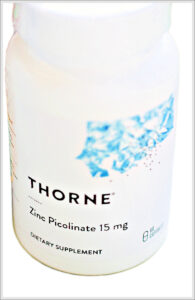 challenges. Taking zinc triggers copper detox. Detoxing copper affects different people differently, and for some, this dose will push copper detox too fast and be too high.) If you’d like to take a higher dose, it’s best to get tested first. I do personally take a high dose, but I know many people who can’t handle it. Slow detox is better than pushing too hard and releasing too much copper.
(Learn here how to take zeolite to sop up the copper — to gentle its exit.)
If you tend to be sensitive, start your zinc dosage lower — 15 mg (find it here) is often well tolerated.
Some people find that any zinc supplement worsens symptoms, in which case it’s best to increase zinc-rich foods and lower copper intake instead. Download a free printable PDF of high-copper foods to avoid here.
Rarely, even high-zinc foods can cause reactions, so in that case, focus on medium-zinc options.
Zinc-rich foods (that aren’t too high in copper—so skip oysters, for example) include:
- Grass-finished beef or bison
- Poultry
- Legumes (all types of beans except soy)
Most people need more zinc than they can get from food, but for some, diet is a good gentle place to start.
For convenience: You can find the best zinc (picolinate) at doses of 15 mg here — or 30 mg here.
Zinc testing from a doctor
If you’re looking to improve your overall health, I recommend my doctor — he offers testing to determine your exact zinc and copper levels and will guide you on the right dosage. (Make an appointment with Nathan or Kelsey, and then see them or Dr. Smith for follow-up weekly free “Office Hours” as needed.
Pin How to Supplement Zinc here:

Emily @ Recipes to Nourish says
Very cool Megan! I had no clue about this. It sounds like it’s super helpful, especially when liver health is involved.
thefoodhunter says
very interesting and good to know. Thank you for sharing.
Megan Stevens says
Great, Jess! 🙂
Eileen - Wellness and Workouts says
Thank you so much for emailing me about this article! My poor health has kept me less active in the circles where I normally interact with you. I hope you will email your list more often, I love your work, you consistently provide such helpful information!
Megan Stevens says
Oh Eileen, I’m so sorry to hear you’ve had poor health lately!! How nice to hear from you, and thank you for your kinds words and encouragement! Many hugs and love for your own encouragement and improvement and hope!
Megan Stevens says
Great, I will hope that for you!
Megan Stevens says
Yes, I think of it as a companion supplement to a healing diet. So just as we do healing diets for years to heal gut lining and promote a better flora ecosystem, it seems wise to continue with the supplement for perhaps 6 months after symptoms have abated. This is the route I’m taking personally. You can weigh what you consider best for your body and circumstances.
Megan says
No, cooked cabbage does not have the same effect. But small amounts of sauerkraut juice will be helpful for some.
Megan says
Hi Deborah, both of these supplements have been studied for use with H. pylori and found to be helpful. Customer reviews on these products for H. pylori are also very good.
Clair says
I had read from your blog the dangers of vitamin A. Do you feel the benefits from vit U outway the possible toxitcy of Vitamin A in it?
Megan says
Hi Clair, thank you for your comment. Vitamin U is sulfuric, so it slow detox. I would stick with low A and the guidelines in the Love Your Liver information for overall gut healing, including liver etc.
Megan says
Hi Deborah, unfortunately that product no longer exists (and I’m not sure how the link switched, but thank you for letting me know). I have updated the post to link to this product: https://amzn.to/3diyeKt
Deborah says
Thank you Megan. Unfortunately, I have tried the Gastromend, but I cannot tolerate it due to the form of vitamin C. It really irritates my bladder because I also have IC which I am working on. I have eliminated fruits and it has helped somewhat. I also have h-pylori but I have difficulty with a lot of supplements due to my IC. I’m afraid I might have to go to a pharmaceutical for the h-pylori. I have also tried Nutricology’s Mastic Gum. It seems very stubborn to get rid of.
Megan says
Hi Deborah, I’m so sorry. Have you tried high doses of colloidal silver? I buy it from a local farmer who makes her own, which makes it affordable. It is my favorite natural remedy of all time. The brand I trust (for the small particle size), if you choose to buy it, is Sovereign, here: https://amzn.to/34RJA43. If you end up loving it and feel you’re improving, you could consider getting a machine to make your own. I would, if I didn’t have the affordable source.
Megan says
Hi Sana, you might consider a small amount of probiotic sauerkraut juice for the vitamin U and supplementing her diet with collagen or bone broth, so she gets the gentle vitamin C, U and gut-building collagen.
Naomi says
My gut seems not to be tolerating food at all, and I’m beginning to really hate food. Everything makes me bloat instantly, even water. I’ve recently begun taking Dr. Mercola’s bitters. I have no gall bladder, and am beginning to connect that with the IBS symptoms I’ve been suffering. I think I will order the gentian and save at least that much money to make my own bitters.
Megan says
Hi Naomi, I’d keep searching for the right diet for yourself, as that makes the most difference, combined with digestive aids until they’re no longer needed. I’ve personally found the low-A & low copper diet to be the most helpful: https://eatbeautiful.net/vitamin-a-detox-diet-free-printable-food-lists-avoid-eat-toxicity/ Here’s my recent post on gall bladder health, too: https://eatbeautiful.net/rethinking-gallstones-bile-toxicity-zeolite-support-healthier-gallbladder/