I may receive a commission if you purchase through links in this post. I am not a doctor; please consult your practitioner before changing your supplement or healthcare regimen. As an Amazon Associate I earn from qualifying purchases.
How to Use Zeolite for SIBO explores two forms of zeolite — nanoparticle zeolite spray (TRS) and powdered clinoptilolite — and their potential benefits for digestive health. We’ll look at scientific studies on heavy metals, bile acids and leaky gut, along with personal testimonies from people who have used zeolite for SIBO.
SIBO (Small Intestinal Bacterial Overgrowth) can be frustrating to resolve. Many people experience temporary relief from antibiotics or restrictive diets, only to have symptoms return.
Why does SIBO keep coming back?
I believe one important area to investigate is the relationship between liver health, bile function, heavy metals and the gut microbiome.
Zeolite interests me because of its ability to bind certain substances, including some heavy metals, and emerging research on its effects on intestinal barrier health.
What Causes SIBO?
SIBO occurs when excessive bacteria accumulate in the small intestine, causing bloating, gas, abdominal pain, constipation, diarrhea and sometimes nutrient malabsorption.
Candida and other fungi may also overgrow in the small intestine, although this is technically called SIFO (Small Intestinal Fungal Overgrowth).
Several underlying problems can contribute to recurring SIBO:
- Poor intestinal motility: Slow movement through the small intestine allows bacteria to accumulate.
- Altered bile function: Bile acids help regulate intestinal bacteria. Disruptions contribute to bacterial imbalance.
- Heavy metal exposure: Certain metals can disrupt gut bacteria and interfere with normal cellular processes. Some bacteria also thrive in environments containing heavy metals, giving them a competitive advantage over beneficial bacteria and encouraging their proliferation.
- Leaky gut: Increased intestinal permeability contributes to inflammation and digestive dysfunction.
These connections are why I believe it’s important to investigate the underlying conditions rather than focusing exclusively on killing bacteria.
The Connection Between SIBO, Liver Health and Bile
Bile is produced by the liver and helps digest fats, but it also plays an important antimicrobial role in the small intestine.
Two studies demonstrate an interesting relationship between bile acids and SIBO.
A 1989 human study found significantly elevated unconjugated bile acids in patients with confirmed SIBO.
Similarly, a 2000 study involving dogs found unconjugated bile acid concentrations approximately 10 to 20 times higher in dogs with SIBO than in healthy dogs.
These findings suggest a close relationship between abnormal bile acid metabolism and bacterial overgrowth.
Supporting normal liver and bile function is an important consideration for overall digestive health, particularly when SIBO repeatedly returns.
Heavy Metals, Candida and the Gut Microbiome
Another possible contributor to poor gut health is heavy metal exposure.
Mercury, lead and cadmium can interfere with normal cellular processes, including enzyme activity, oxidative balance and neurological function.
They can also affect the intestinal microbiome.
A 2013 study by Breton and colleagues found that lead and cadmium exposure altered gut bacterial populations in mice.
Another study by the same researchers demonstrated that intestinal bacteria can influence heavy metal absorption. Mice without normal gut bacteria accumulated more cadmium and lead than mice with an established microbiome.
These findings suggest a two-way relationship: Heavy metals disrupt gut bacteria, while a healthy microbiome helps protect against metal absorption.
What About Mercury, Candida and Gut Motility?
Mercury is particularly interesting because it can affect the nervous system.
The vagus nerve helps regulate digestive function, and impaired intestinal motility is an established contributor to SIBO.
Heavy metals also influence microbial competition, including fungal populations.
How Zeolite Helps SIBO
Zeolite is a naturally occurring mineral with a porous, cage-like structure that can capture or exchange certain positively charged ions.
One type, clinoptilolite, is commonly used in oral zeolite supplements.
Its mineral structure allows it to grab hold of positively charged toxins in the digestive tract, including toxic heavy metals.
This makes zeolite interesting for people concerned about environmental exposures and digestive health.
Additionally, research suggests that zeolite beneficially influences intestinal barrier function.
There are two forms worth discussing.
1. Nanoparticle Zeolite Spray: Advanced TRS
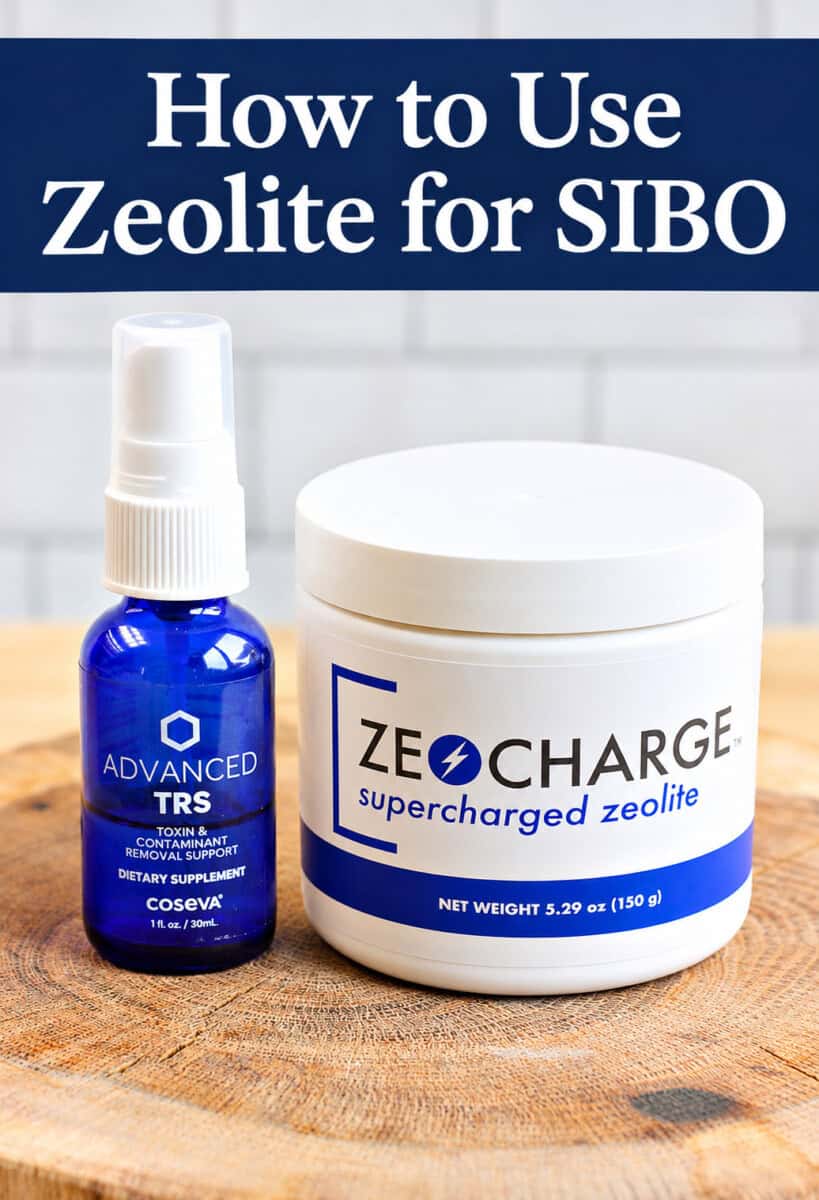
Advanced TRS is an oral zeolite spray containing a specially manufactured clinoptilolite preparation dispersed in water.
Unlike conventional powdered zeolite, TRS uses extremely small particles, which the manufacturer describes as providing a larger surface area for binding.
TRS is marketed for supporting the removal of unwanted metals and environmental contaminants.
For people interested in the potential relationship between heavy metals and SIBO, this makes it an intriguing option.
I also like TRS because it’s safe for pregnancy and nursing, with innumerable testimonies of women who believe it gave them healthier babies by gently and safely reducing toxins.
How to Use TRS for SIBO
The manufacturer’s standard adult serving is five sprays daily.
The commonly discussed approach is gradual:
- Day 1: One spray in the morning.
- Day 2: Two sprays.
- Following days: Gradually increase toward five sprays daily, assuming it’s tolerated.
TRS Testimonials for SIBO
People report improvements in bloating, digestive discomfort and symptoms they associate with IBS or SIBO after using TRS.
Others report improvement when combining TRS with additional digestive-health protocols.
You can read personal experiences in this TRS heavy metal detox Facebook discussion.
To buy TRS, go here (and click Shop Now). Choose “Advanced TRS”. I buy the 3-pack in glass bottles.
2. Powdered Clinoptilolite Zeolite
The second form is conventional powdered clinoptilolite, typically mixed into water before consumption.
This form has particularly interesting research related to intestinal permeability, commonly called leaky gut.
Zeolite and Leaky Gut: The Research
A 2015 randomized, placebo-controlled clinical trial investigated zeolite supplementation in 52 endurance-trained adults.
Participants received either zeolite or a placebo for 12 weeks.
The zeolite group consumed 1.85 grams daily.
Researchers found that stool zonulin concentrations, a proposed marker associated with intestinal barrier regulation, decreased significantly in the zeolite group.
The placebo group did not show the same improvement.
Why This Matters for SIBO
SIBO and increased intestinal permeability can occur together.
A 1996 study involving dogs with SIBO found increased intestinal permeability in approximately 52% of the animals.
Permeability measurements improved in dogs retested after successful antibiotic treatment.
Zeolite’s effects on intestinal barrier markers are inspiring for people experiencing SIBO-related digestive dysfunction.
How to Use Powdered Zeolite
Powdered clinoptilolite is generally mixed with water.
Starting dose recommendations are 10 to 30 grams daily.
I recommend and use a product independently tested for heavy metals and contaminants. I’m happy to offer my readers 10% off Zeocharge. Simply visit their website and use code MEGANSTEVENS at checkout.
Zeocharge also has an excellent, educational website where you can learn more about what makes their product superior. Take some time to explore, see lab results after zeolite use, and don’t forget to use your discount code when you’re ready to order.
Because zeolite may bind certain medications or interfere with their absorption, timing and potential interactions are important considerations.
Which Zeolite Is Better for SIBO?
Both forms offer different potential benefits.
TRS nanoparticle spray is marketed primarily for heavy metal binding and detoxification. It has generated personal testimonials about digestive improvements. It is safe for pregnancy and nursing.
Powdered clinoptilolite has more directly relevant human research and case studies on intestinal barrier markers and IBS, making it a good choice for people concerned with leaky gut and heavy toxic metals.
Final Thoughts: Zeolite, Liver Health and SIBO
Recurring SIBO deserves a broader approach than simply eliminating excess bacteria.
Research demonstrates important relationships between bile acid metabolism, intestinal motility, heavy metals and the gut microbiome.
The liver plays a central role in this interconnected system through bile production and its many metabolic functions.
Zeolite is compelling because of its ion-binding properties (heavy toxic metals) and research showing benefits for intestinal barrier regulation.
You might also enjoy:
More zeolite articles:
- How to Reduce Histamines with Zeolite
- Gallbladder Health with Zeolite
- How to Increase Bone Mass with Zeolite! (for Osteoporosis and aging)
- Why Zeolite Often Outperforms Antibiotics
- How to Detox the Toxins in JOINTS to Reduce Joint Pain (with Zeolite, diet and exercise)
- How to Improve Regularity & Consistency of Poops with Zeolite (their completeness, texture & shape)
- How Nano-Particle Zeolite and Zinc Help Copper Toxicity
- Overall Zeolite Health Benefits, and Which One to Choose for Your Needs
Pin How to Use Zeolite for SIBO Here:

Leave a Reply