I may receive a commission if you purchase through links in this post. I am not a doctor; please consult your practitioner before changing your supplement or healthcare regimen. As an Amazon Associate I earn from qualifying purchases.
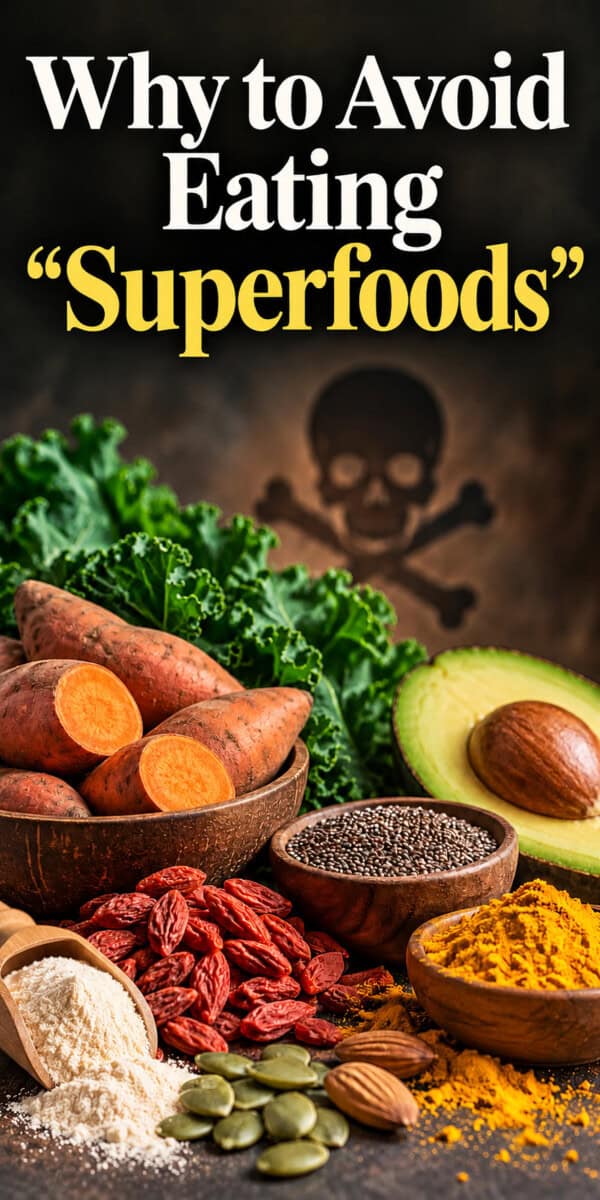
Why to Avoid Eating “Superfoods” discusses why more nutrients aren’t necessarily better — and how superfoods may actually undermine health. We also reveal that most, if not all, superfoods contain toxins that many people aren’t aware of …
We’re constantly being told to eat more superfoods. Organ meats, spirulina, turmeric, collagen, kale and sweet potatoes are promoted as nutritional powerhouses. We’re encouraged to eat them regularly, sometimes even daily, to achieve optimal health.
But there’s a fundamental problem with this advice.
Those who advocate for superfoods do so because they’re high in certain nutrients. But what they often overlook is the fact that these same foods may be TOO HIGH in certain “nutrients”, too.
More isn’t necessarily better. And when we concentrate on getting large quantities of particular nutrients, we may unintentionally expose ourselves to substances our bodies don’t need in such large amounts (or at all, as we’ll see with nickel).
Let’s look at some examples.
Organ Meats: When Nutrient Density Becomes a Liability
Liver is one of the most heavily promoted superfoods. It’s exceptionally high in B vitamins, copper, iron and vitamin A.
Someone who starts eating liver regularly might initially experience increased energy, particularly if they were deficient in certain B vitamins.
But what happens over time?
Liver contains extremely high concentrations of vitamin A, which accumulates in the body. Excessive, prolonged consumption can lead to vitamin A toxicity, damaging the liver and causing other health problems.
This isn’t hypothetical. It’s actually an epidemic affecting millions of people worldwide.
Here’s just one — of many — published medical reports documenting a patient who developed liver cirrhosis following long-term, frequent consumption of beef liver.
Organ meats also contain substantial amounts of copper (a heavy metal that our bodies need only the tiniest fraction of to thrive but that’s toxic in larger volumes), and some are particularly rich in purines, which the body converts into uric acid.
Eating organ meats daily isn’t necessary to obtain adequate nutrition, and excessive liver consumption presents a documented risk (one I’ve experienced myself).
A food can be exceptionally nutritious and still be inappropriate for consumption because of the toxic overload it may cause if eaten too often.
Spirulina, Turmeric and Other Superfoods: What Else Are You Consuming?
A problem within the superfood industry is this emphasis on beneficial compounds without giving equal (or any) attention to unwanted substances.
Consider these examples:
Spirulina: Frequently marketed for its vitamins, minerals and antioxidants, a study examining 24 commercial spirulina preparations identified nickel, aluminum, cadmium and lead.
Spirulina also contains high levels of copper, manganese and vitamin A precursors (carotenoids), which contribute to excessive nutrient intake, and it can accumulate heavy metals and pharmaceutical residues from its growing environment. Spirulina products may also contain cyanobacterial toxins such as microcystins, while convincing human evidence that spirulina effectively detoxifies accumulated heavy metals remains lacking.
Turmeric: Turmeric is promoted for its curcumin content, but how turmeric “works” and contamination are other considerations.
Learn how turmeric works, and why it’s best to avoid here.
Regarding contamination
A 2024 study examining turmeric sold in four South Asian countries found that 14% of samples contained detectable lead above 2 micrograms per gram. Some showed evidence of deliberate adulteration with lead chromate.
A food’s reputation as a superfood doesn’t guarantee its purity or safety.
Collagen: Collagen powders are promoted for their potential benefits to skin, joints and connective tissues. However, these products are often derived from animal skins and other connective tissues that contain heavy toxic metals.
A 2025 study detected several toxic elements also in commercial marine collagen supplements, including arsenic and lead.
Kale and sweet potatoes: Both are exceptionally rich in carotenoids, including beta-carotene, which the body converts into vitamin A.
Learn more here about all of the ways that vitamin A is now known to be toxic.
There’s no nutritional requirement to eat enormous quantities of kale or sweet potatoes simply because they’re advertised as superfoods.
Concentrating our diets around a handful of supposedly miraculous foods can create unnecessary exposure to both toxins and contaminants.
Many other superfoods apply as well
Perhaps there’s not space enough to list all of the additional superfoods which also carry with them dangers, but here are a few for the curious:
- goji berries = nightshade, which cause inflammation and joint pain
- chia seeds = high in omega 6s, high in copper and nickel
- flax seeds = estrogenic, high in copper and nickel
- avocado = high in copper
- dark chocolate = super high in copper and nickel
What Do People Who Live to 100 Actually Eat?
We’re constantly being encouraged to consume expensive powders, exotic vegetables and concentrated nutritional supplements. But where is the evidence that eating large quantities of these superfoods helps people live longer (or heals the root cause of sicknesses)?
There is no convincing long-term evidence establishing that consuming any particular food marketed as a superfood, especially in unusually large quantities, extends human lifespan.
Instead, research on centenarians suggests a much less sensational approach.
A 2024 systematic review examined 34 studies involving people aged 95 to 118. More than 60% of participants consumed diverse diets, and researchers identified several lifestyle characteristics associated with healthy aging.
As most of us now know, longevity involves much more than food. Social relationships, physical activity, sleep, genetics (least of all!), mental health, stress and other lifestyle factors all contribute.
Rather than obsessing over superfoods, consider three important elements of healthy living:
- Community: Strong relationships, family connections and meaningful social interaction. Where can you volunteer, or what group can you join, to find lovely people (if you don’t already have a strong community)?
- Lower stress: Adequate rest, enjoyable activities, healthy relationships, good mental health and a sustainable lifestyle.
- Balanced nutrition: Eating enough nutritious food without continually pursuing excessive quantities of individual nutrients.
Plus:
- A Few Minerals: We can’t get the minerals from our food that we used to. Read my articles on minerals like zinc, selenium (supports thyroid health), magnesium and potassium to balance the body. Some people may also need minerals like iron, while others may need to donate blood to reduce iron … But the point is: Healthy aging does not include eating more superfoods. However, adding in a few isolated minerals after hair testing can help make up for any deficiencies that occur, largely due to modern toxicities.
Research also associates good social relationships with healthier dietary behaviors among older adults.
Simple Foods Can Be Incredibly Nutritious
Did you know that beef, white rice and apples provide an impressive combination of nutrients?
(If one of these doesn’t agree with you, simple subs can be made: For example beef could be subbed/rotated with venison, buffalo, chicken etc. Rice provides just one example of a healthy, low-toxin carbohydrate. Etc.)
Beef supplies complete protein, zinc, iron, vitamin B12 and taurine. Rice provides carbohydrates for energy, while apples contribute fiber and beneficial plant compounds (for daily bowel movements).
These ordinary foods can form the foundation of simple, satisfying meals without relying on expensive superfoods or concentrated supplements.
For people following a temporary elimination diet, a combination of well-tolerated foods can also simplify meals while they identify problematic ingredients.
Beef, rice and apples alone don’t completely supply every essential nutrient in adequate amounts for long-term health (but close!). Additional foods are needed (ideally) long term, particularly for calcium.
Beans can contribute calcium, fiber and other minerals. Small amounts of dairy, such as yogurt or mozzarella cheese, can also provide calcium for those who tolerate them.
The goal isn’t to replace one restrictive nutritional philosophy with another. It’s to recognize that ordinary foods can provide substantial nutrition without the need to chase nutritional extremes.
The Hidden Danger of the Superfood Mentality
The greatest danger of superfoods isn’t any single food, if eaten occasionally. It’s the belief that if something contains beneficial nutrients, eating it regularly must produce greater benefits.
That simply isn’t how nutrition works.
The body requires nutrients within appropriate ranges. Excessive intake of certain vitamins and minerals can cause toxicity, while contaminated foods and supplements can introduce substances we never intended to consume.
Vitamin A toxicity provides a particularly important example. Excessive preformed vitamin A can accumulate in the liver and cause serious damage. In severe documented cases, chronic toxicity has progressed to liver failure. But more commonly, we see a wide variety of illnesses with hidden vitamin A (oftentimes alongside nickel) as the root cause.
Similarly, consuming multiple concentrated powders and supplements can increase cumulative exposure to unwanted contaminants.
Conclusion: Balance, Not Extremes
Don’t feel compelled to eat spirulina, turmeric, organ meats, collagen, kale or sweet potatoes simply because someone calls them superfoods.
A healthy diet doesn’t require any of them, and research hasn’t shown that eating enormous quantities extends human life.
They all present documented risks when consumed excessively.
Instead of loading up on supposedly miraculous foods, consider a simpler approach: ordinary nutritious meals, appropriate portions, adequate nourishment (with a few essential minerals), meaningful relationships and a lifestyle that supports your health.
Pin this article here:

Leave a Reply