I may receive a commission if you purchase through links in this post. I am not a doctor; please consult your practitioner before changing your supplement or healthcare regimen. As an Amazon Associate I earn from qualifying purchases.
Getting good sleep isn’t just about a bedtime routine — or what some call sleep hygiene. What you eat matters, too. Certain foods contain compounds that help your body wind down, fall asleep faster and stay in deeper, more restorative sleep. I have noticed the difference personally when I eat certain foods.
What makes this list different from others is that every food on it is also anti-inflammatory — so it’s doing double duty for your health.
I’ve divided this list into two categories: foods that help you fall asleep sooner, and foods that support better sleep quality once you’re there.
Foods That Help You Fall Asleep Sooner
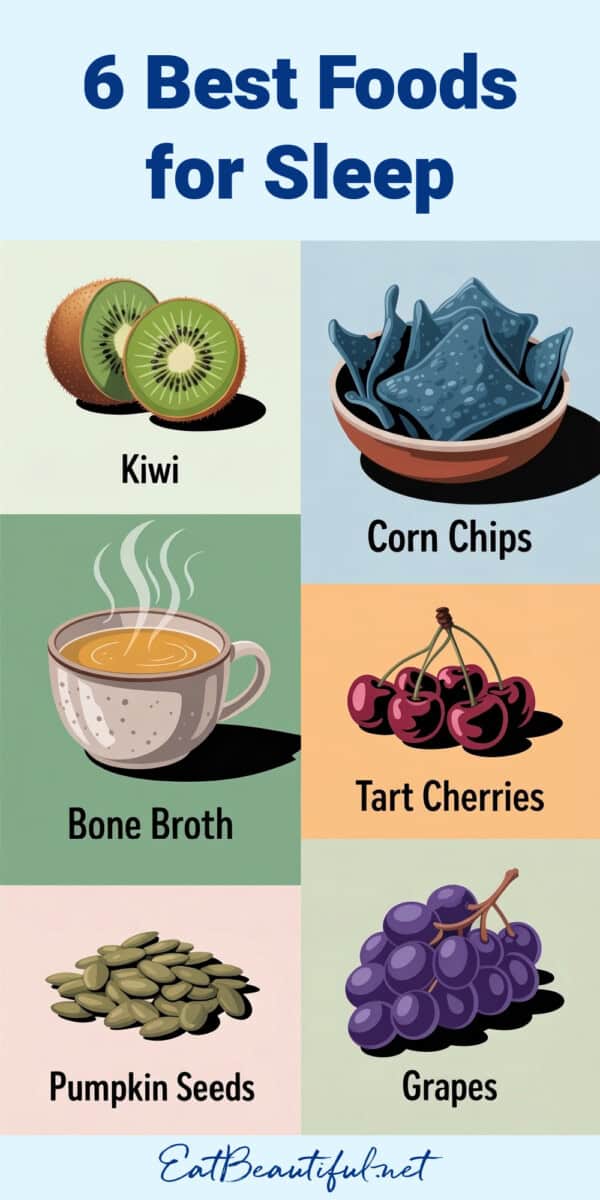
1. Grapes — Melatonin & L-Arginine
Grapes are one of the few whole foods that naturally contain melatonin, the hormone your body uses to regulate its sleep-wake cycle. Unlike many sleep-promoting foods that work indirectly through amino acid conversion, grapes deliver this sleep signal straight from the skin — particularly red and purple varieties.
Nebbiolo, Croatina and Merlot grapes have been found to carry notably higher levels.
Grapes are also a source of L-arginine, an amino acid that acts as a nitric oxide precursor. When nitric oxide is released into the bloodstream, it relaxes blood vessels, calms endothelial cells and reduces neural firing — making falling asleep a natural side effect.
A cup of fresh grapes before bed is a simple, low-effort way to nudge your body toward sleep.
2. Tart Cherries — Melatonin
Tart cherries are another of the few foods that contain melatonin directly. They also contain anthocyanins, which are anti-inflammatory and may support overall hormonal balance.
Tart cherry juice has been studied for its effect on sleep onset and is one of the more well-supported food-based sleep aids.
Look for juice with no added sugar, or eat tart dried cherries in small amounts. (Find them here.)
3. Masa and Other High-Calcium Foods — Calcium → Melatonin
Calcium plays an indirect but important role in sleep onset. The body needs calcium to produce melatonin, the hormone that signals it’s time to sleep. Low calcium levels are associated with disrupted sleep and difficulty falling asleep.
I eat white masa almost daily, and it’s one of my favorite ways to get dietary calcium gently. (Find Masa Waffles here, or Masa Polenta here. I also make it into a drink, like a thin porridge.)
Good anti-inflammatory, dairy-free sources of calcium include:
- Finger millet (ragi) — 200 mg of magnesium per cup cooked
- Masa — 125 mg per cup cooked (Choose white masa, like this.)
- Vaquero or Great Northern beans — 90–120 mg per cup cooked
- Dried figs — 6 dried figs (assuming the little bit of fruit sugar won’t bother you; find them here)
Go slowly when increasing calcium. Find a whole list of high calcium foods here.
My doctor recommends working toward 500 mg of dietary calcium daily, and not exceeding 1000 mg from all sources.
Foods That Help You Get Better Sleep Quality
These foods support deeper, more restorative sleep — helping you stay asleep, cycle through sleep stages properly and wake up feeling rested.
4. Pumpkin Seeds — Magnesium & L-Arginine
Magnesium is one of the most important minerals for sleep quality. It activates the parasympathetic nervous system — the one responsible for rest and calm — and regulates GABA receptors in the brain, which quiet neural activity. Low magnesium is strongly associated with restless sleep and frequent waking.
Pumpkin seeds contain roughly 150 mg of magnesium per one ounce. Another option is Brazil nuts. One-half cup of Brazil nuts (roughly 60-70g or a large handful) contains approximately 210–245 mg of magnesium.
(Keep in mind: Approximately [only] 30% to 40% of dietary magnesium is absorbed by the body. Magnesium is soluble, so cooking can reduce the magnesium content in food. Learn more about supplementing with magnesium here.)
Pumpkin seeds don’t just rank high in magnesium; they also contain more L-arginine than most sources: A half cup of dried pumpkin seeds (approx. 64g) contains about 3.3–3.5g of L-arginine. This is one of the highest concentrations available.
Find organic pumpkin seeds here.
5. White Rice or Masa Porridge — Tryptophan → Melatonin
Simple, easy-to-digest carbohydrates eaten in the evening can raise insulin slightly, which helps shuttle tryptophan across the blood-brain barrier. Tryptophan is a precursor to serotonin, which is then converted to melatonin. This is one reason a small, starchy evening meal often improves sleep depth.
Rice porridge or masa porridge work well for this.
Masa especially is easy on digestion and blood sugar levels, which matters; heavy, hard-to-digest or high glycemic index foods eaten close to bedtime tend to fragment sleep.
For a “fun food” that’s made from masa, I also have one snack food that I love and that seems to help with sleep — and that’s organic blue corn chips that are made with avocado oil. Find them here. (Avoid conventionally grown and yellow corn chips or any corn chip cooked in vegetable oil.)
6. Bone Broth or Collagen — Glycine
Glycine is an amino acid with a well-documented calming effect on the nervous system. It lowers core body temperature, which is a key signal for deeper sleep. It also supports serotonin production. Studies have found that 3 grams of glycine before bed improves sleep quality and reduces daytime fatigue.
Bone broth is a natural source of glycine. (Find the best pasture-raised bone broth powders here: beef or chicken. At checkout, use code MEGAN15 for 15% off your order.)
Collagen powder is another option — it stirs easily into warm water or a light broth in the evening. (Find the best 3rd party tested collagen here. Use discount code BEAUTIFUL10 for 10% off your entire order.)
You can also buy a pure glycine supplement here — which aids both sleep onset and sleep quality — when a person needs glycine.
Disclaimer — Not everyone benefits from glycine, and for some, high amounts of glutamate, found in well-cooked or concentrated bone broth, can “overload” the nervous system, leading to alertness or anxiety. As a result, bone broth is not a good sleep solution for everyone.
7. Kiwi Fruit — Serotonin and Antioxidants
Kiwi is an interesting one.
It contains serotonin precursors as well as a strong antioxidant profile, including vitamin C and folate.
A small study found that eating two kiwis an hour before bed for four weeks significantly improved total sleep time and sleep efficiency. The antioxidant load may reduce oxidative stress that disrupts sleep cycling.
It’s one of the gentler fruits on blood sugar as well, and I’ve found it excellent for digestion while being gentle with the liver.
Kiwi fruit is also high in L-arginine — with 146 mg per cup sliced.
Lastly, kiwi are high in potassium, which is the missing piece for good sleep for many — with 550 mg of potassium for 1 cup sliced.
Kiwi are my new favorite fruit! They offer so many benefits, and they’re gentle to digest without the offending dietary toxins that often come with other fruits.
Free printable PDF
Print your free PDF here to remind yourself which foods help with sleep.
A Note on What to Avoid
Just as important as what you eat is what you don’t eat before bed.
A few things consistently disrupt sleep:
- High iron foods in the evening — iron is stimulating and may interfere with sleep onset for some people
- Heavy proteins late at night — hard to digest and can fragment sleep
- High vitamin A foods — research links excess vitamin A to hormonal disruption, which can affect sleep quality indirectly
- Alcohol — feels sedating but suppresses REM sleep
Small dietary shifts in the evening can make a real difference. I’d start with one or two of these, and see how your body responds — everyone is a little different.
Pin Foods That Help You Fall Asleep and Sleep Better here:

Dorothy says
This is helpful information, as sleep can be elusive. I recently bought a large bag of blue corn chips and the oil listed on the ingredients is “organic palm olein oil”. I wondered if you’re familiar with that. It says “no seed oils” on the bag.
For these foods to be helpful for sleep, do they need to be consumed late in the day, or is there any benefit to eating them earlier?
Megan says
Hi Dorothy, The palm oil listed is a better choice indeed than seed oils, but it’s not as good as avocado oil, olive oil, or tallow, for example — if you can find those in the future. The foods should be eaten shortly before bed if you’re looking for a benefit from a compound like melatonin, but if you’re looking for the benefits of something like calcium, earlier in the day is okay. So it depends what your body needs — which food compound is helping you sleep better that you needed more of? 🙂
Dorothy says
That helps, Megan. Thank you for the list of foods that help promote sleep and the other helpful information. 🙂
Megan says
My pleasure, Dorothy! 🙂