I may receive a commission if you purchase through links in this post. I am not a doctor; please consult your practitioner before changing your supplement or healthcare regimen. As an Amazon Associate I earn from qualifying purchases.
Let’s look at what vibration plates are, vibration plate benefits, when and why to use these machines — including during sickness — and specific exercises to do when you’re well.
In a world where wellness trends come and go, vibration plates quietly stand out as a science-informed, genuinely useful tool — not a magical shortcut, but a deeply supportive system that works with your body’s natural physiology. Whether you’re strengthening muscle, moving lymph or simply supporting your system on a day when you can’t get outside, vibration plates deserve thoughtful attention.
How Vibration Plates Work
At their core, vibration plates — often referred to in research as whole-body vibration (WBV) — are platforms that send controlled mechanical oscillations through your body. When you stand, sit or gently move on them, those vibrations trigger rapid muscle contractions as your nervous system reflexively stabilizes your posture, engaging muscles much like traditional strength work does.
From a biological perspective, your muscles aren’t just passive receivers. They contract and relax repeatedly — sometimes dozens of times per second — which recruits a wider range of muscle fibers than static standing or passive stretching alone.
This is one of the reasons vibration can contribute to muscle strength and tone even without heavy weights.
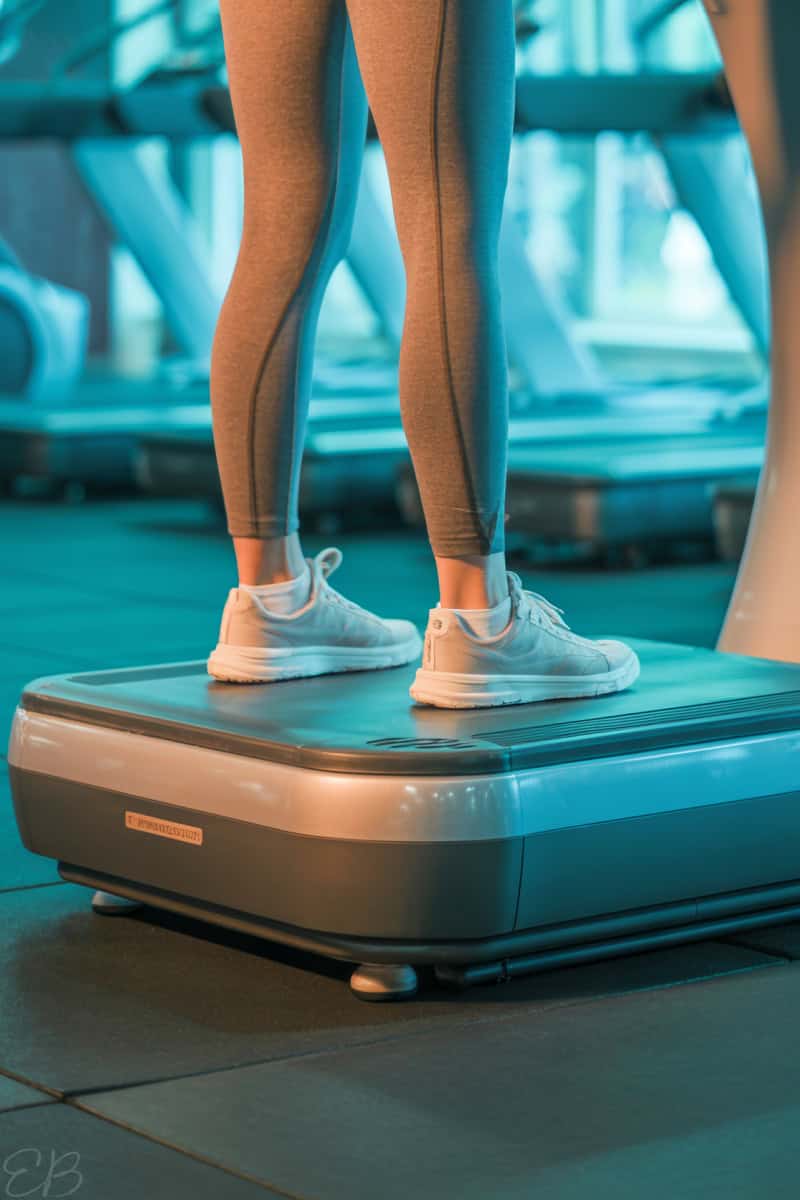
Muscle — built without heavy impact
You might wonder: Can a vibration plate actually help build muscle?
Yes — but with nuance.
Scientific studies show that WBV improves muscle strength and physical performance, especially in populations who might not tolerate heavy resistance training, like older adults. A randomized controlled trial found measurable improvements in muscle strength and physical performance after regular WBV training.
It’s not magic — vibration activates your neuromuscular system in a way that enhances recruitment of fibers, particularly in the lower body, and when combined with simple movements (like squats or calf raises), can supercharge the effect.
For anyone with limited mobility, joint sensitivity or a reluctance (or inability) to lift weights, vibration plates offer a gentler but effective path to maintaining muscle performance.
My two cents
This reason is why I personally love my vibration plate. My leg strength has always felt limited. Now, with my vibration plate, I can do the same squats I’ve always done, but the benefit is multiplied. And, if I’m sick, which I recently was, I can also just sit or stand on the plate to get benefits — better than lying in bed all day! (More about this below …)
So I’m excited — that there’s a wellness tool for those of us who aren’t super strong — but want to get stronger as we age — even when we’re sick or our health is compromised.
The Lymphatic System: Your body’s silent detox engine
Vibration plates shine in ways people often underestimate — and can’t see.
The lymphatic system is a network of vessels and nodes that circulates lymph fluid, carrying waste products from the blood, immune cells and excess fluid away from tissues. Unlike the circulatory system, lymph can’t move on its own — it relies on muscle contraction and movement. When muscles contract, they squeeze lymphatic vessels, pushing fluid forward and helping prevent stagnation.
This is why moving lymph is so important:
- It supports immune function.
- Reduces swelling and fluid retention.
- Promotes detoxification of metabolic waste.
- Supports tissue healing and recovery.
Vibration plates mimic the effects of movement by stimulating rapid, rhythmic muscle contractions across your body. This “pumping” action significantly enhances lymph flow — which is why many users report feeling less bloated, lighter and more energized after sessions.
I always notice more energy after using mine.
Walking vs. Vibration Plates — both are valuable
Vibration plates are not usually a replacement for walking or traditional exercise. Instead, they are a complement — but can replace exercise when movement is limited due to illness, injury or fatigue.
A classic study comparing vibration exercise to walking found that each improved physical function in postmenopausal women, but that vibration alone doesn’t fully replicate all the benefits of walking, such as cardiovascular conditioning.
Walking:
- strengthens the heart and lungs,
- enhances coordination,
- loads bones in a dynamic, natural way,
while vibration plates primarily focus on neuromuscular activation and internal fluid movement.
Use vibration as an addition — not a substitute — most days.
But, on days when going for a walk isn’t possible (like when you’re sick, weather’s bad or mobility is limited), a 10 to 20-minute vibration session can stimulate circulation and lymph flow in a gentle, supportive way.
Healing when you can’t move much
When I was sick recently, I wasn’t able to do much other than lay in bed. As I recovered, going for walks right away was premature. What I found to be really helpful was sitting on a stool, with my feet on the vibration plate.
With no effort on my part, I was getting lymphatic flow — and surprisingly, I got the benefit of increased energy.
So … one of the most valuable aspects of vibration plates — and what makes them truly healing — is their accessibility.
When you’re:
- under the weather,
- recovering from illness,
- stuck indoors,
- lacking energy,
you can still stand or sit on a vibration plate with minimal or no effort and engage your muscular and lymphatic systems.
That’s huge — because movement matters for health even when you don’t feel up for a workout.
Research into related vibration therapy also suggests beneficial effects on other systems, including immune signaling and even brain function, by activating mechanotransduction pathways and modulating inflammatory markers.
Other vibration plate uses
Some of these uses may be why you’d love a vibration plate best:
- Some vibration plate users love them for how they help with recovery and muscle repair after a heavy workout.
- Vibration plates can be used to reduce stress.
- Increase bone density with vibration plates. Several studies show WBV being used to treat or prevent osteoporosis with really impressive results.
- Use after surgery or an injury to reduce inflammation and swelling.
- They help with weight loss and water retention.
- Users report these additional benefits: less back pain, better sleep, improved circulation, recovery from jobs that require hours of standing, disappearance of cellulite, and more toned arms and abs from using the resistance bands.
Which vibration plate to choose
I like best and have the Lifepro brand. Lifepro is considered the best brand for beginner users and for getting lymph flow going. It’s well loved by customers, and the model I link to comes with a lifetime guarantee:
Here’s a great vibration plate at a good price.
However, in digging around a little bit, I also discovered this less expensive vibration plate that’s considered every bit as good as Lifepro, but with a lower price tag. The customer reviews are fantastic.
Who should not use
Vibration plates should be avoided by individuals who are pregnant, have severe cardiovascular disease, pacemakers, acute thrombosis or recent surgeries/implants. Other contraindications include severe osteoporosis, epilepsy, acute hernias, severe migraines and vertigo.
Specific exercises to do on a vibration plate
A vibration plate can be used for a wide range of strength and stability movements. Because the surface is constantly vibrating, even familiar exercises tend to feel more challenging and engaging. Below are several beginner-friendly movements to get you started.
I don’t personally have the leg strength to do lunges, but I do Step-ups, Squats, Calf raises … and for my upper body, Forearm plank. Do what’s right for your body.
LOWER BODY
Step-ups
Stand facing the plate and place one foot firmly on the platform. Drive through that heel to lift your body up onto the plate, then slowly step back down. Complete all repetitions on one side before switching legs.
Bodyweight squats
Stand on the vibration plate with your feet about hip-width apart and toes angled slightly outward. Sit your hips back and lower into a squat, keeping your chest lifted. Press through your heels to return to standing.
Reverse lunges
Begin with one foot on the vibration plate and step the opposite foot back into a lunge. Keep your front knee tracking over your ankle and your torso upright. Push through the heel of the foot on the plate to return to standing. Complete your reps, then switch sides.
Calf raises
Stand tall with both feet on the vibration plate. Slowly lift your heels by pressing through the balls of your feet, then lower them back down with control.
UPPER BODY
Elevated push-ups
Position your hands on the vibration plate, slightly wider than shoulder width, with wrists stacked under your elbows and shoulders. Bend your arms to lower your chest toward the plate while keeping your core tight and your body in a straight line. Press back up to the starting position with control.
Forearm plank
Rest your forearms on the vibration plate with elbows directly under your shoulders. Extend your legs behind you so your body forms a straight line from head to heels. Engage your core and keep your hips level as you hold the position for the desired amount of time.
Because the vibrations increase muscle activation and balance demands, these movements often feel more intense than when performed on stable ground. It’s normal to reduce repetitions or slow your pace so you can maintain proper form and minimize the risk of strain.
Vibration Plate Benefits Conclusion
Vibration plates are not a quick fix, and they certainly don’t replace the joy and benefit of a brisk walk or intentional strength training. What they do offer is a scientifically grounded, gentle way to activate muscles, support lymph flow and keep your system engaged on days when traditional exercise feels out of reach.
Used consistently and thoughtfully, these tools honor the body’s inherent design — stimulating natural processes that support healing, strength and circulation — while fitting seamlessly into a balanced wellness routine.
When Vibration Plates Do Make Sense
✔️ Muscle engagement without high impact — ideal for sensitive joints or recovery phases.
✔️ Enhanced lymphatic drainage and circulation, especially useful after long periods of inactivity.
✔️ Complement to standard exercise regimens, not a replacement.
✔️ Accessibility for all fitness levels — from beginners to rehabilitation patients.

Debbie Blanchard says
Hi Megan, I’ve been considering getting a vibration plate to help with osteoporosis. I noticed that you did not mention this in your post. Do you know how helpful vibration might be to stimulate bone production? I believe the astronauts use them when they are going to be in zero gravity for any length of time.
Also, I understand there are different speeds or frequencies to use depending upon your goals. Do you have any guidance on that issue? Thanks so much, friend!
Thank you for this informative post.
Megan says
Hi Debbie, Happy to help 🙂 and glad the article was timely. I don’t know how I missed including it, but you’re absolutely right: Used to help with or help prevent osteoporosis. I think I mentioned bone density in the article. Vibration plates, or whole-body vibration devices, help treat and prevent osteoporosis by delivering high-frequency, low-magnitude mechanical signals to the skeleton. These vibrations stimulate osteoblasts (bone-forming cells), improve muscle strength and balance to reduce fracture risk, and enhance bone density — particularly in the hip and femur (with some studies showing positive effects on the lumbar spine) — by simulating high-intensity, weight-bearing exercise. We also see from this study that WBV: “increases the level of growth hormone and testosterone in serum, preventing sarcopenia and osteoporosis”.
Studies often use frequencies around 30 to 40 Hz to boost bone density. Some research indicates that while high frequencies can increase muscle strength, low-intensity, low-magnitude vibration (LIV) is also a safe, effective option. Recommended sessions are typically around 10 t o 20 minutes, 3 to 5 times per week. Using the plate while holding a static, upright position (e.g., squatting) provides the best results. Another good study: https://pmc.ncbi.nlm.nih.gov/articles/PMC4458848/ Blessings!
Jana says
Thank you very much Megan for this informative article. The days during winter when it’s hard to go out, and my still battling copper toxicity – this sounds wonderful. Just stand on it or do squats and such. Maybe this will help me have a light exercise “mental trigger” – I get on it, and it’s time to do the lifting or stretching. I ordered the less expensive one, and I’ll comment after I try it out.
Megan says
That’s great, Jana! I’m so glad to hear it. I have found what you said: It’s easy to add simple exercises while you’re standing on it, and more “fun” than just standing there! So getting on it initiates more exercise. 🙂 I look forward to hearing how you like it.