I may receive a commission if you purchase through links in this post. I am not a doctor; please consult your practitioner before changing your supplement or healthcare regimen. As an Amazon Associate I earn from qualifying purchases.
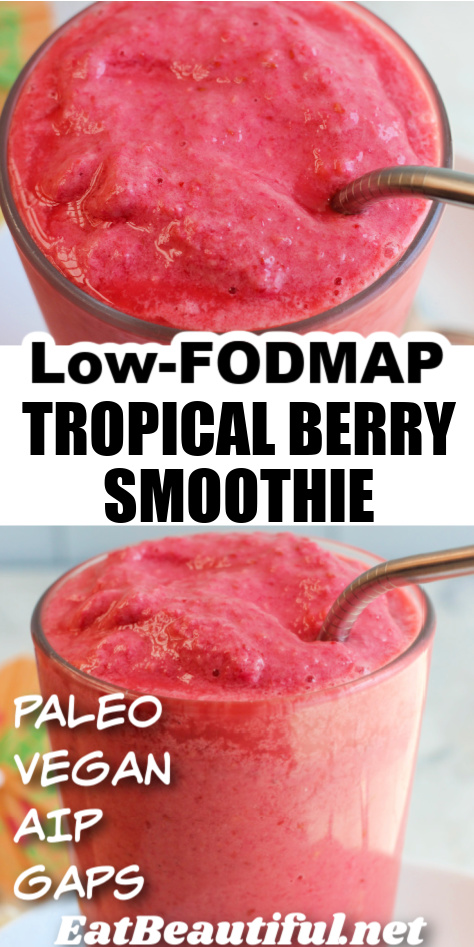
This Low-FODMAP Tropical Berry Smoothie provides the best healthy treat without the bloating or GI distress. Because so many of us have a variety of food sensitivities, this recipe has a few variations, to make sure it works for you. So choose the ingredients that are gentlest and best for your body.
My goal was to make you an awesome Low-FODMAP Tropical Berry Smoothie recipe!
This recipe is great for most diets, including Paleo, AIP, GAPS, Vegan, refined sugar-free and real food healthy diets! 🙂
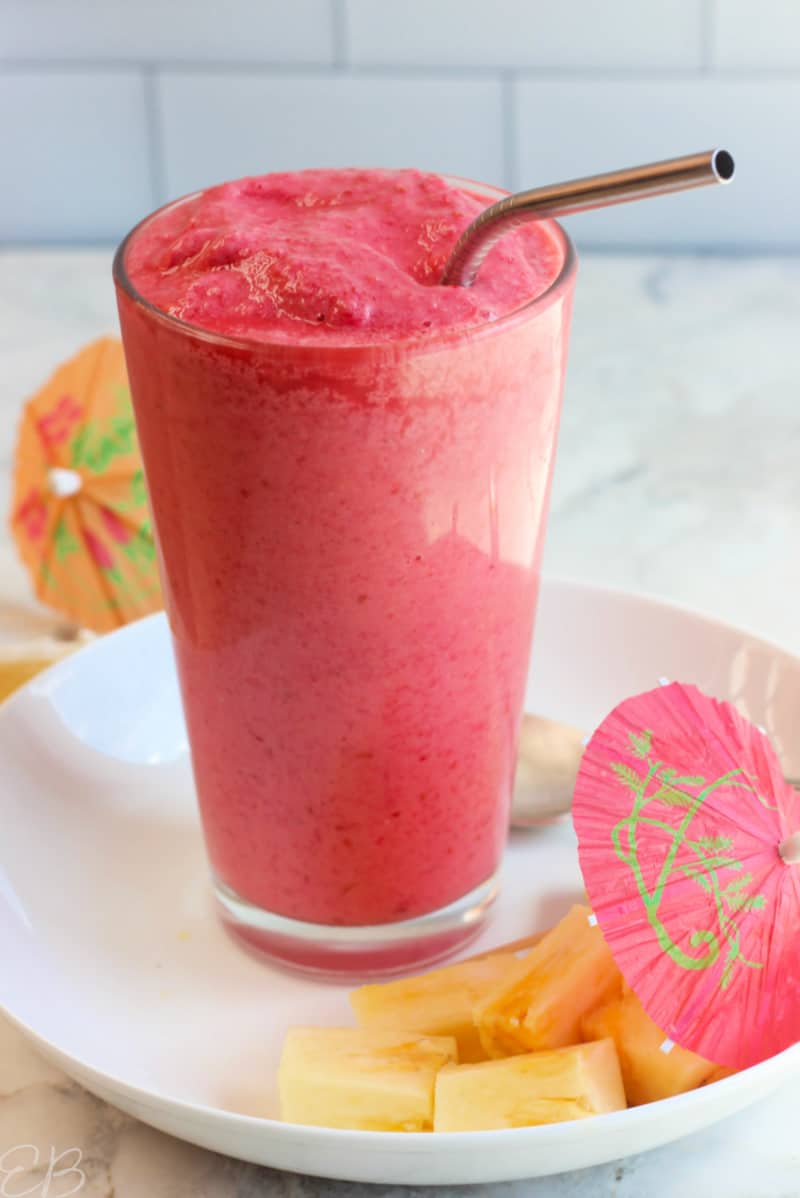
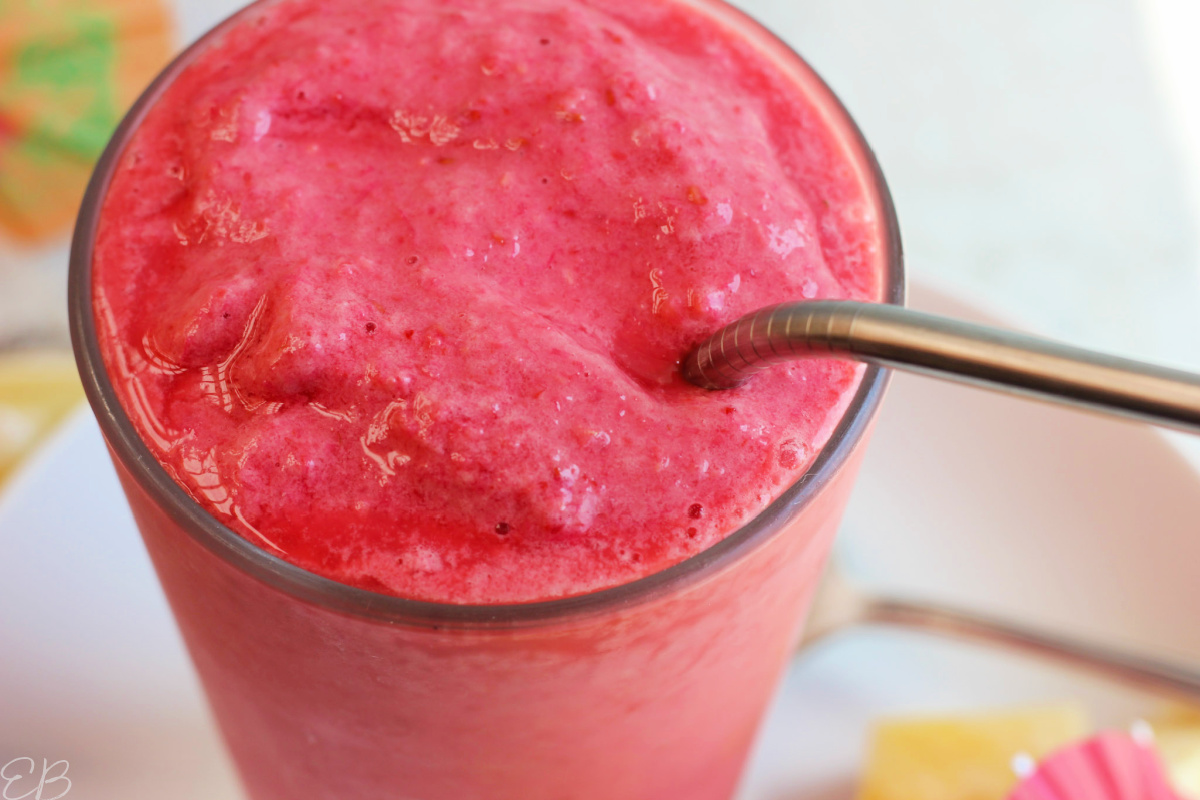
Benefits of the Low-FODMAP Smoothie
The Low-FODMAP diet removes certain foods that cause bloating from the diet, allowing gut healing to happen — before the same foods are reintroduced one by one. (Bloating happens because certain foods ferment in the gut.)
So — this smoothie contains none of those inflammatory foods.
Instead, enjoy a sweet treat and gentle digestion.
You can learn more about Low-FODMAP eating and acquire helpful resources, as appropriate to your needs here:
- How to do an AIP and Low-FODMAP diet with free printable food list
- Gluten-free, Paleo and GAPS diet + Low-FODMAP food lists
- Keto and Low-FODMAP diet with free printable food list
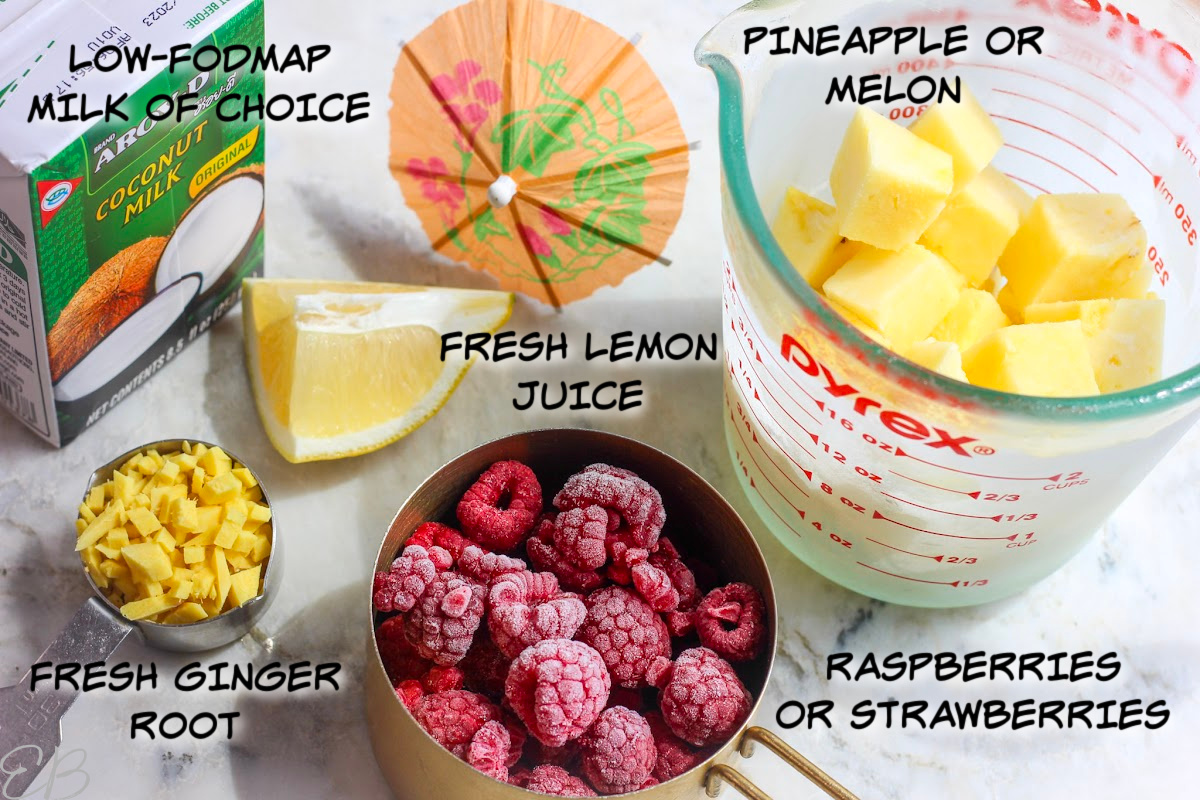
Ingredients in Low-FODMAP Tropical Berry Smoothie
The combination of pineapple (OR melon if it’s better for your body), lemon and ginger sets this recipe apart from all others. These flavors are super captivating and satisfying. Then, depending on your preference or dietary needs, you’ll also use frozen berries — either strawberries or raspberries.
Here’s the full list of ingredients:
- frozen pineapple — OR melon if preferred/sensitive to pineapple
- milk of choice (coconut or tiger nut are good choices for AIP); OR, you may use water if you can’t have either; Homemade Macadamia Nut Milk is a great choice for Paleo, GAPS and Vegan; organic rice milk is okay for non-Paleo; see the Notes section below the main recipe for all milk options.
- frozen berries — strawberries or raspberries: Take note that raspberries do have noticeable seeds, so not everyone likes them in their smoothies. I find they’re fine in this one, but not if you have a strong aversion.
- fresh lemon juice
- fresh ginger
- maple syrup — Or you may omit the sweetener for GAPS; otherwise, it’s recommended to heighten the flavors and counterbalance the fresh lemon juice
- optional sea salt — heightens flavors and adds electrolytes for rehydration
How to make Low-FODMAP Tropical Smoothie
One step is good to keep in mind before making your smoothie, depending on how you prep or buy your ingredients:
- This recipe uses frozen pineapple or melon. Do you want to freeze your own, or buy it already frozen? Personally, I like to freeze my own when fresh is available at the grocery store, because it saves a lot of money. (Little bags of frozen organic pineapple are pricey!) If you plan to freeze your own, plan ahead — so your frozen fruit is ready when you need it.
Allow about 3 hours minimum for freezing small chunks of fruit.
Once all your ingredients are lined up and ready, the How-to for this recipe is just: throw everything in the blender, and purée!
If your smoothie is extra thick, you may also need the tamper that some blenders come with, or a wooden spoon or spatula, to stop, and mix/stir the ingredients once during blending — in case any air pockets form down by the blade.
Which blender is best for thick smoothies
I’ve used a lot of blenders over the years because we used to own a café with homemade ice cream, smoothies and soups. We worked those machines hard.
The best machine to get the smoothest results is: Blendtec’s blender with the WildSide+ Jar.
In second place, still a very good blender is this Vitamix model, but with the tamper.
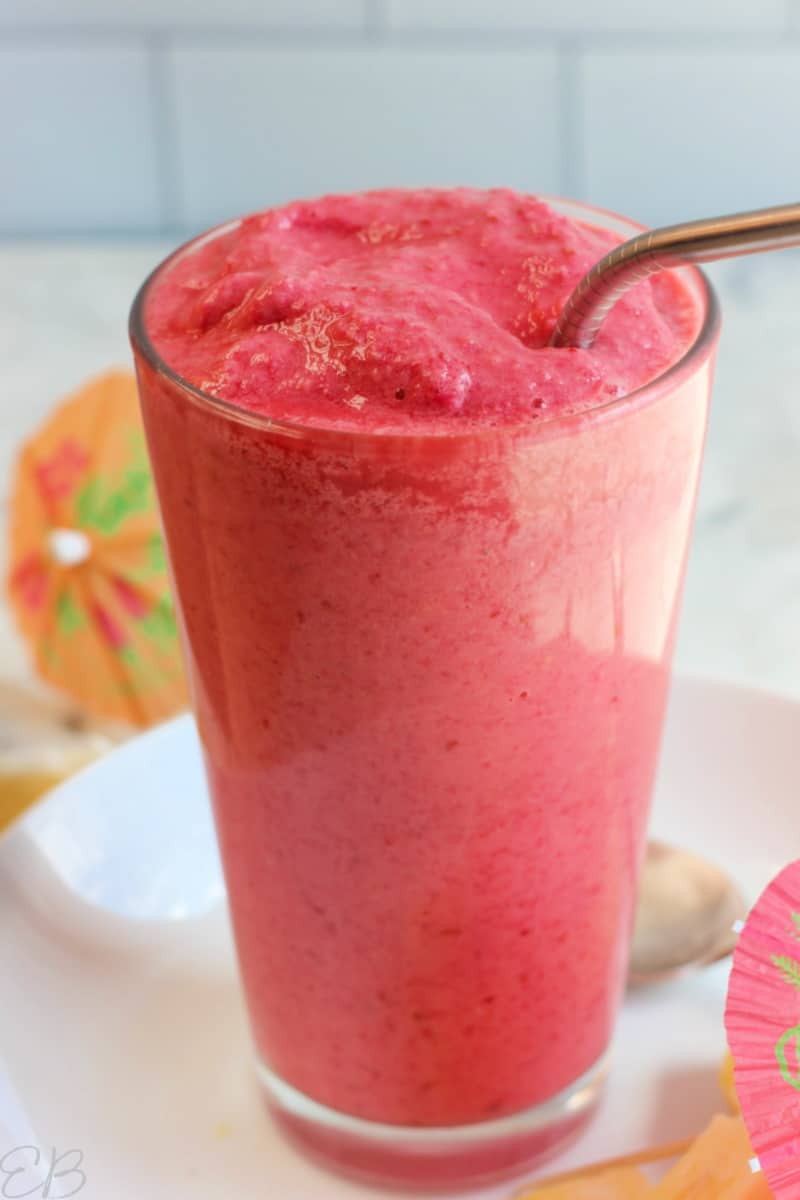

Low-FODMAP Tropical Berry Smoothie
Equipment
Ingredients
- 1-½ cups pineapple frozen OR frozen melon if preferred/sensitive to pineapple
- 1-¼ cups tiger nut milk , OR for coconut milk, use ½ cup coconut milk + ¾ cup water OR for non-AIP/Paleo: 1-¼ cups Macadamia Nut Milk; see Notes below for all milk options (Note: Coconut milk is the only milk that needs to be diluted with water, otherwise the flavor is too strong and dominates.)
- ¾ cup strawberries or raspberries
- 1 to 2 Tablespoons ginger fresh root, minced small or grated, choose the amount based on how much you enjoy the fresh ginger flavor
- 1 Tablespoon maple syrup (omit for GAPS)
- 1 Tablespoon lemon juice fresh
- 2 pinches sea salt heightens flavors and add electrolytes for rehydration
Instructions
- Put all the solid ingredients in the blender: Pineapple or melon, berries, ginger and sea salt. Add milk, maple syrup and lemon juice.
- Blend first on low speed, and then increase to medium-high, for a total of 40 to 50 seconds, until smooth.
- Serve and enjoy!


Notes
All Low-FODMAP Milk options
- Paleo, Vegan & AIP -- Tiger nut milk, coconut milk ... or water may be used.
- Paleo, Vegan, GAPS -- Macadamia Nut Milk, homemade, hemp milk, almond milk
- Non-Paleo -- Soy milk, rice milk, quinoa milk, lactose-free milk
Nutrition
You can Pin Low-FODMAP Tropical Smoothie here:
More Low-FODMAP sweet treats
- Carrot Cinnamon Milkshake
- Tapioca Floats
- Beautiful Rhubarb Sauce
- Coconut Yogurt
- Tiger Nut Yogurt (contains sweet potato, so may not work for everyone)
- Zucchini Bread
- Strawberry Sauce
- Blender Strawberry Ice Cream

Ruth Patterson says
Just wondering if you know about Dr. Brooke Goldner of goodbyelupus.com. She says she’s help heal people of lupus and other ailments with green smoothies. She also said she healed herself of lupus with the green smoothies. She recommends a lot of greens, more than the fruit. I heard her say she’s not heard of anyone having trouble with oxalates with the smoothies. You hear so many things on the internet, how do we know what to believe? I’d appreciate your response.
Megan says
Hi Ruth, I appreciate your question. And yes, the dilemma of who to believe is real. I think that on the surface, Dr. Goldner got “healing”. It’s what my doctor calls Duration Paradox. Antioxidants, polyphenols and other components of produce that we think of as healthy function well for our bodies by taking toxins to the liver for storage to protect us from them. That would be fine 100 and more years ago when toxins were limited and green smoothies did not exist. But we inundate ourselves with these “super foods” in a way that is not remotely natural or Ancestral. No native person that remained disease-free ever ate huge amounts of greens to be healthy. The primary healthy food has always been meat first, and then gathering or growing fiber-based foods after that. The veg foods come in second as far as their priority and what quantity our bodies can handle. There are rare exceptions where a certain human does not do well with meat, but it is not common. So I think that is more logical, as far as trying to decide who is sharing the truth. The “eat the rainbow” mindset is new; we have no long term studies showing it prevents or actually fully heals disease. In the case of people who say they are healed, I do not think it’s true. I think their livers are fit to burst, sadly, and eventually, they will end up with new diseases and perhaps the old ones, too. We do have plenty of evidence of this. My liver healing group is full of people who ate “Ancestral” diets that included lots of daily leafy greens, or similar, and they all ended up with oxalate issues, histamine issues, eczema, kidney issues etc. Doing the diet we’re now doing is healing all those people, but it also takes a long time to undo the damage to the liver. Sadly, leafy greens are also high in copper. It is taking me many many years to overcome my copper toxicity. Unfortunately this is not talked about because it is either misunderstood, or the proponents of greens etc are ignorant to the dangers of consuming so much produce. Plant foods have many defenses, and we are not meant eat huge amounts of them. Imagine a true native diet, all in balance. What I’ve found is that I am always confused when I hear bad teaching, but I only have full peace when I receive the truth. I highly encourage you to listen to Dr. Garrett Smith’s YouTube videos (The Nutrition Detective) or read more of his work. The way he digs into the facts makes it very transparent what’s true. And then when you start eating a “Love Your Liver” style diet, the lifestyle proves itself. If you do this, be mindful to include activated charcoal from the beginning. Once our bodies start to detox, the toxins are freely exiting the body, and with a leaky liver or gut, can get into the bloodstream to wreak more havoc. The activated charcoal binds toxins as they exit protecting us from them. Well, as you can see, I could go on and on. But I hope this has begun to clarify and help.