I may receive a commission if you purchase through links in this post. I am not a doctor; please consult your practitioner before changing your supplement or healthcare regimen. As an Amazon Associate I earn from qualifying purchases.
Monosodium glutamate (MSG) has long been misunderstood and vilified in popular culture, often blamed for headaches, fatigue and other symptoms. Once labeled an “excitotoxin,” MSG became the scapegoat for what was termed “Chinese Restaurant Syndrome.” But emerging research and personal case studies suggest that not only is pure MSG safe when consumed appropriately — it may, in fact, offer health benefits.
What is MSG, really — misunderstood nutrient
MSG is a combination of sodium and glutamate.
Glutamate is the second most abundant amino acid in the human body and plays a critical role in various biological functions.
Enzymes such as ALT, AST and GGT are all involved in glutamate metabolism. The body naturally produces more glutamate when it needs energy or when it’s responding to the presence of heavy metals, as glutamate also functions as a detoxifying agent.
Contrary to outdated beliefs, glutamate does not cause brain damage. According to a 2000 study published in European Journal of Clinical Nutrition, “There is no evidence for brain damage in humans resulting from dietary glutamate”.
Furthermore, MSG and naturally occurring glutamate in foods like tomatoes, cheese, beef and soy sauce are chemically identical — the body does not distinguish between the two.
The origins of MSG misinformation
The fear surrounding MSG began with a 1969 study in which newborn mice were injected with extremely high doses of MSG. These mice, just two days old and lacking a fully formed blood-brain barrier, displayed brain lesions — results that were not replicated in properly controlled studies using oral consumption in adult animals.
Later studies involving rats, mice and gerbils have consistently shown no brain damage, even when given high doses of MSG.
Case Study: Re-discovering MSG’s benefits
Kelsey Kenney, a health facilitator for Dr. Garrett Smith, discovered the benefits of pure MSG while managing copper toxicity — a condition characterized for her by heavy menstrual bleeding, mood issues and difficulty detoxing.
Unable to tolerate zinc, she turned to MSG as a potential detox aid.
Health benefits
Starting with 4 grams of pure MSG, her heavy menstrual bleeding stopped almost immediately, though she experienced mild detox symptoms (a sore neck).
Upon adjusting the dosage, she noted several additional improvements: enhanced body composition, improved ADHD symptoms and increased sociability.
Her experiences were echoed by others who tried MSG — including improved sleep, clearer skin, enhanced muscle gain and better mental health.
If you’re interested in learning more, I highly recommend Dr. Smith’s recent YouTube video, where he and Kelsey dive deeper into MSG — discussing the science behind it, its safety profile and the many potential benefits. Watch the video here.
Why do some people react to MSG
When people report negative reactions to MSG, the culprit is often not MSG itself but the context in which it’s consumed.
Restaurant foods labeled as containing “MSG” often also include hydrolyzed proteins, sulfites and allergens like soy or wheat — all of which can provoke reactions.
Consuming MSG alongside processed or inflammatory foods undermines its benefits.
Health implications and mechanisms
Glutamate plays a foundational role in gut health and is essential for producing glutathione — the body’s master antioxidant.
It supports zinc absorption and helps excrete excess copper, which is crucial for mental health, hormone balance and cardiovascular health.
Interestingly, human breast milk contains ten times more glutamate than cow’s milk, underscoring its importance in early development.
ALDH
Moreover, glutamate supports the function of aldehyde dehydrogenase (ALDH), the enzyme involved in detoxification.
Many individuals, especially those of East Asian descent, have a slower ALDH gene and may benefit from additional glutamate. This could help explain why MSG is widely used in Asian cuisine without the adverse effects often reported in Western populations.
The long-standing use of MSG in many Asian diets may also help explain the historically longer life spans observed in these populations.
How to use MSG safely 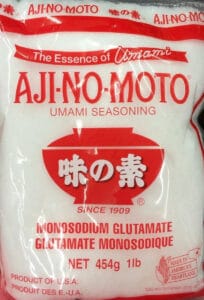

For those interested in trying MSG, the key is purity and moderation. Start with a small sprinkle of pure MSG (like the brand Ajinomoto) on a protein-rich meal. MSG boosts the meal’s protein and mineral efficiency and supports detoxification processes.
Avoid combining it with heavily processed or inflammatory foods, as this can interfere with its beneficial effects.
My experience taking MSG as a supplement
I was invited to participate as a beta tester for MSG, and I welcomed the opportunity — especially because I had been dealing with a recurring bleeding issue in my throat that had persisted intermittently for years. While vitamin K provided some relief, it was never sufficient to fully resolve the problem.
Cautious at first due to the common concern about MSG-induced headaches, I began with a very small dose. To my surprise, I experienced no negative side effects and was able to gradually increase my intake without issue.
It’s important to note that individuals vary significantly in their optimal dosage. While some may notice benefits from just a light sprinkle on their meals, others may require higher amounts — up to 2 or 3 teaspoons per day — for therapeutic effects.
I happen to fall into the latter category and currently take approximately 2 teaspoons daily.
My results
The results were both rapid and profound: Within just one to two days of starting MSG, the bleeding in the back of my throat completely stopped. Additionally, I had a couple of recurring skin lesions inside my nose—small, persistent spots that would flare up occasionally over the past six years as part of my detoxification process from excess vitamin A. These also healed immediately and have not returned.
If MSG was able to facilitate the healing of visible, surface-level wounds so quickly, it raises exciting possibilities about its impact on internal conditions such as leaky gut or inflammation in epithelial tissues we can’t see.
Beyond the physical improvements, I noticed significant benefits in mood, mental clarity and sustained energy — particularly for physical activity and day-to-day responsibilities. (How is it that I actually love doing chores now? Spring cleaning in late summer!?)
My kids
Encouraged by my own results, I introduced MSG to my teenage son and adult daughter, both of whom also experienced noticeable improvements in mood and overall mental well-being. My daughter also saw significant improvements in her menstrual cycle, with reduced cramps and bleeding.
Dosing MSG for yourself
For those considering MSG, I recommend starting with a small amount sprinkled on meals, particularly alongside protein. From there, gradually increase your intake as needed, depending on how your body responds. If a small amount brings noticeable benefit, that may be all you need (my daughter just sprinkles it on her food).
But if not, don’t hesitate to experiment with slightly higher doses (like me — I use one teaspoon for my son daily, and two teaspoons for myself). Men may require higher doses than women. (I’m unique because I usually require higher doses of supplements.)
Everyone’s needs are different, and finding the right level can make a meaningful difference.
Conclusion
MSG has been misunderstood for decades, but current research and practical evidence suggest it may be a powerful and safe tool for supporting detoxification, mental health, hormonal balance and gut function. When used thoughtfully, MSG isn’t something to fear — it may be a nutrient worth embracing.
Choose only the brand Aji-no-moto (find it here) for purity. It’s inexpensive, exciting to experiment with, and the results can be both surprising and encouraging.
If anyone does experience a headache from MSG — which can occasionally happen — Dr. Smith recommends reducing the dose to an even smaller amount and gradually increasing it over time as your body adjusts and builds tolerance.
You can Pin MSG: A Misunderstood Nutrient with Potential Health Benefits here:

Nico says
This article has come at such an opportune time for me. I decided to delve more into the world of Chinese food, a cuisine that I absolutely love. I ordered some fantastic cookbooks and was looking at the recipes with msg thinking I could just leave it out but knew the results would not be the same. So I am very excited about this.
Megan says
Oh awesome, Nico. Great to hear, and happy for you! Who knew it could actually be good for us: Mind blowing. Enjoy! 🙂
Pazo says
There is much research about msg, dose dependent for sure, but much is not positive. Far from just one crazy study mentioned here. Though, its good to hear that in some moderation, there might, maybe if other conditions are there, also some benefits to be found.
S says
Hey Megan, thank you so much for sharing this new information!! I’ve done so much work on my mental health over recent years but nothing has had as rapid an effect as taking MSG! Within a few days even my husband could tell how much lower my anxiety levels were. So excited to see what other benefits unfold. 🙏
Megan says
Wow, S, thanks so much for sharing. I’m so happy for you! Another great testimony to how fast MSG works, and its incredible benefits for stress management and overall mental health. 🙂 Blessings for more good things to come and continue!
Sarah says
Great info, thanks! Any idea on why it would cause a headache? I want to try it but I’m prone to headaches- I will definitely start slow if I try it.
Megan says
Hi Sarah, My pleasure. Dr. Smith mentions several other food additives that are often used with MSG that could give headaches. He goes into more details in his YT video on the topic, naming them. A lot of times, the MSG product itself isn’t pure. It’s one of several ingredients and sold looking like the same product. I know that I personally used to get headaches from it in restaurant food, but I don’t at all now with the pure MSG product. The unpure products are cheaper, so perhaps more likely to be used in restaurant food than pure MSG. Pure MSG is glutamic acid, something our bodies both need and make. I was a bit scared to try it, too, and thought I’d only be able to handle a tiny amount, but I actually use near the upper limit of it daily.
Sarah says
Can it need to be sprinkled on during cooking, or just use it like a table salt? Also, is it ok to use it in combination with lemon papier seasoning, onion powder etc? Or would that cause inflammatory issues?
Thank you!!
Megan says
Hi Sarah, Good questions. You can use it either way, according to your own personal preference. I use it during cooking, but my grown up daughter uses it at the table like salt. You may wish to make potassium salt for the best approach: https://eatbeautiful.net/homemade-lite-salt-salt-substitute-recipe-morton-copycat-salt-potassium/ You could add MSG to that mixture if you like. Sorry to say that neither lemon pepper nor onion are ideal. Fresh lemon juice is fine, but lemon rind is not, and onion powder is something the body detoxes almost upon contact, thus the issues with “onion breath” or “garlic breath” or people smelling like garlic after they eat it. I do use dried rosemary, powdered, dried dill, and a little cumin or ginger/dried ginger. I hope that helps.
Eileen says
Hello Megan,
I would like to try the MSG for my sleep troubles and brain fog. I also like that it can help the gut. I do have some health issues, Rheumatoid Arthritis and Hypothyroid. Will this product help, hinder or do nothing for these issues?
Megan says
Hi Eileen, Are you already doing a low nickel or low vA + low copper diet? (I’m sorry for the delayed response!)
Eileen Poggi says
No I haven’t tried a low nickel or low vA + low copper diet. What will that help me with?
Megan says
Whether RA, sleep troubles, thyroid issues or brain fog, the root cause is toxicity (and resulting imbalances). We haven’t heard until recently the role of toxins like nickel and copper (why they’re so prevalent in this day and age), and how they exacerbate the role of vitamin A in the body, making retinoic acid more toxic. I recommend you watch the videos of Dr. Smith on YouTube, or read any of my articles on copper, nickel or vitamin A. When we reduce the intake of these three, the liver heals itself, and everything else follows. Instead of chasing symptoms, we address liver (and other bodily) toxicity. MSG helps along the way with restoring cellular energy, improving mental health, increasing muscular strength and more. https://www.youtube.com/@NutritionDetective This is the path I’ve taken myself, and the results are beyond encouraging.
Eileen Poggi says
Hello Megan,
Thanks for responding so quickly. I purchased the MSG you recommended and I will give it a try.. I hope at the very least I can get back to falling asleep and staying asleep all night long.
I also listened to Dr. Smith’s video. A lot of their symptoms I am not dealing with. However, I do hope to have a better mood and also not feel so tired or anxious. That will be wonderful.
I will let you know how things work for me.
Thank you
Guillermo says
Dear Megan, it’s been a worth while since last time!
Big thanks for this publication regarding MSG. There’s no difference in regards to free glutamic acid present in several foods.
I wonder if its benefits are undermined when used with flavorless gelatin and cardamom.
Kind regards!
Megan says
Hi Guillermo, nice to hear from you, and I hope this finds you well! Glad you enjoyed this article! 🙂