I may receive a commission if you purchase through links in this post. I am not a doctor; please consult your practitioner before changing your supplement or healthcare regimen. As an Amazon Associate I earn from qualifying purchases.
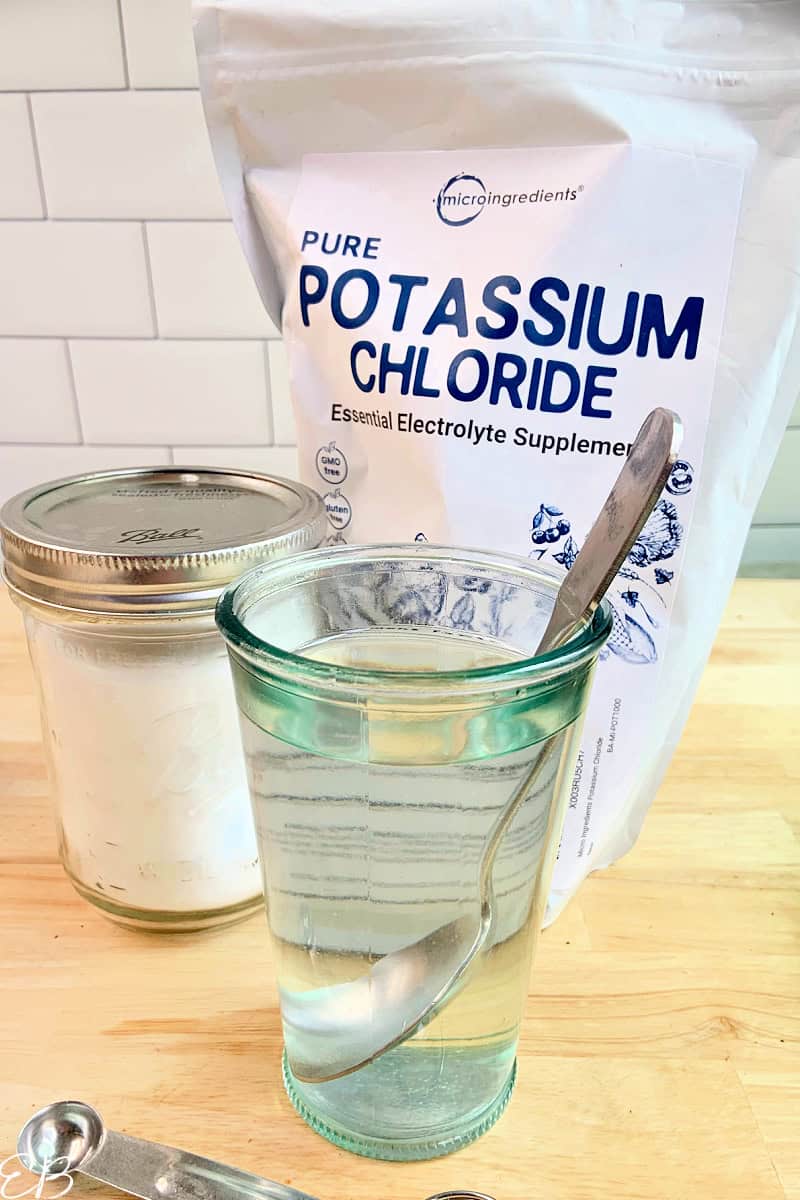
Learn how to make this easy 2-ingredient Potassium Water recipe. Potassium is the most important mineral to get each day when we drink water.
Other minerals used in DIY electrolyte drink mixes (like sodium and magnesium) can be incorporated easily in other ways. But it’s potassium we need, to stay hydrated and function our best.
Start each day with this simple recipe of just potassium and water. I stir mine up and have it with breakfast and morning supplements. It’s fast, effective and energizing.
You can also sip on it throughout the morning or day.
When our cells get hydrated, we feel our best.
One more reason most people need potassium
Many supplements, conditions and circumstances deplete potassium.
Studies show us that inadequate potassium intake may raise blood pressure, increase the risk of kidney stones, elevate bone turnover, boost urinary calcium excretion, lead to glucose intolerance/diabetes and heighten salt sensitivity (meaning that variations in sodium intake have a greater-than-normal impact on blood pressure).
More common side effects of insufficient potassium include constipation, fatigue, muscle weakness, insomnia and malaise.
What depletes potassium:
- stress
- stored vitamin D supplements
- copper toxicity
- vitamin A toxicity
- heavy sweating
- magnesium deficiency
- IBS, including Crohn’s disease and ulcerative colitis
- also: laxative abuse, diuretic use, eating clay (pica), dialysis, certain medications, vomiting and diarrhea
What form of potassium to use
Potassium chloride is the most common and generally effective.
But potassium needs are also highly individual and not one-size-fits-all. So if you’re one of the people that potassium chloride 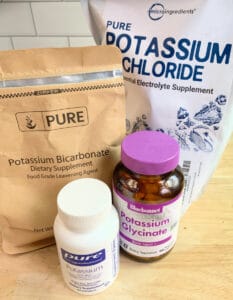 doesn’t agree with, I give other options as well.
(If it doesn’t agree with you, you may get a mild headache, GI discomfort or dizziness. I’m sorry for that; there’s no way to discover your best potassium other than trying the most popular compounding first, and if that doesn’t work, try the next one. [Unless you know how to do applied kinesiology, which might be helpful.])
Different dosing
Be mindful as you follow the recipes in this post that different compoundings of potassium means different dosing for each.
If you use 1/8 teaspoon of potassium chloride to get 365 mg of potassium, you will use a different dose of a different chemical compound of potassium to end up with the same amount of elemental potassium.
Somewhere around 365 mg of potassium daily is a good place to start for daily Potassium Water. If your body loves the potassium, this amount can be doubled.
I do the doubled amount more than once a day; I’m sharing a low starting dose on purpose so you can be sure it’s right for you.
When to drink potassium water
Potassium is best absorbed in the small intestine, with food. While it can be absorbed on its own, taking it with meals ensures optimal absorption, benefits and reduces the chance of any stomach discomfort (which isn’t common).
I drink my first portion of potassium water with breakfast and my morning supplements, but it’s also okay to continue to drink it throughout the day.
If you try higher doses of potassium, over time, it’s good to spread out the amount throughout the day; don’t drink it all at once.
Recipe using potassium chloride — Most popular, and what I use
- 16 ounces water, either reverse osmosis or distilled are ideal
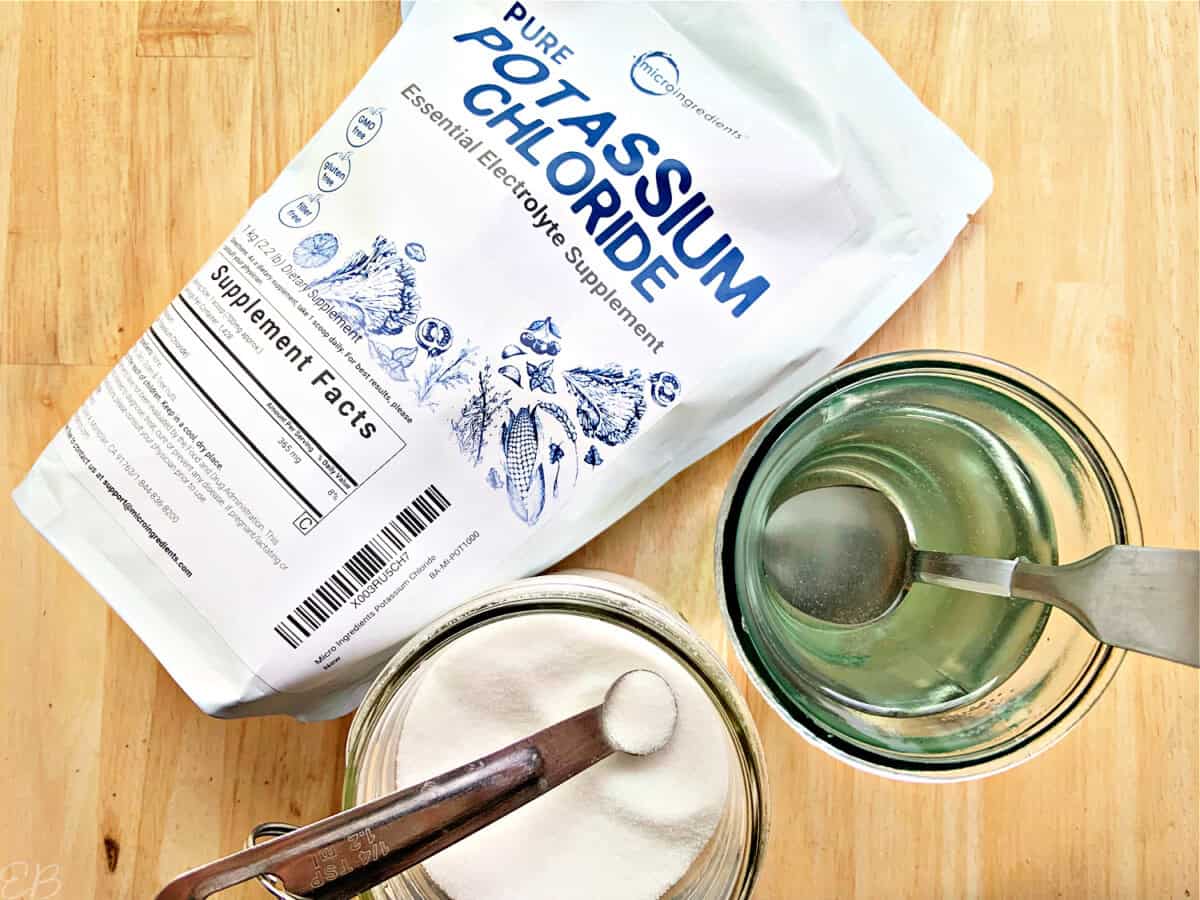
- 1/8 teaspoon potassium chloride (365 mg) to 1/4 teaspoon
Simply stir the potassium into the water until it dissolves, which is very quickly.
Each compounding of potassium has its own unique taste. Potassium chloride is a little salty in flavor.
First alternative to potassium chloride that works well ~
Potassium citrate and potassium bicarbonate:
As mentioned, you need more potassium citrate and potassium bicarbonate to get the same amount of elemental potassium that potassium chloride provides.
- 16 ounces water, either reverse osmosis or distilled are ideal
- 1/8 teaspoon potassium citrate (200 mg) — or up to 1/4 teaspoon
- 1/16 teaspoon potassium bicarbonate (150 mg) — or up to 1/4 teaspoon
- Potassium bicarbonate can make the body too alkaline over time, so it’s better for short term use only (a few months perhaps). Or mix it in a glass with some fresh lemon juice, stir (it will fizz), and then drink.
This above recipe uses three ingredients because potassium citrate balances the flavor and effects of potassium bicarbonate well.
Second alternative to potassium chloride that works well ~
Cream of tartar (tartaric acid):
- 16 ounces water, either reverse osmosis or distilled are ideal
- 3/4 teaspoon cream of tartar (375 mg) — or up to 1 teaspoon, but not more
This form of potassium (potassium bitartrate or potassium acid tartrate), and higher doses of the others, can be used for constipation. Be aware that cream of tartar may cause looser stools, but for some some, will cause an improvement in bowel movements. Do not exceed 1 teaspoon cream of tartar for this reason.
Other forms of potassium that agree better with some people
- potassium gluconate — 99 mg per 1/4 teaspoon. May be helpful for those with muscle cramps.
- potassium lysinate — Harder to source, this compounding of potassium could theoretically also be used to make a daily potassium water drink that helpful for competitive athletes. Studies show this form of potassium may be more helpful than others for exercise performance.
- potassium glycinate — 99 mg per capsule, this form of potassium is harder to find, but works best for some people, those who seem to need more of the amino acid glycine in their diets.
What fruits are high in potassium
Eating certain fruits is another great way to increase your daily potassium. These fruits are all high in potassium and also generally very healthy foods:
- apples
- bananas
- green grapes
- coconut water (with no other ingredients; this is a good one)
Other sources of potassium
- Try using potassium salt instead of plain salt (including sea salt or colored salts).
- See the Potassium Salt recipe here.
- Choose organic: Peeled Russet potatoes are a good source, but they’re also a nightshade. So don’t overdo.
- Choose organic: Lentils, prunes, raisins and kidney beans (source)
Pin this 2-Ingredient Potassium Water recipe here:

Hélène says
Coconut water is high in potassium? What brand is that?
Cream of tartar has a nice, tangy taste!
Megan says
Hi Helene, Yes, coconut water has about 600mg of potassium for 1 cup! It’s an excellent source. One downside, of course, is it’s expensive to drink it daily — and contains sugars. So glad you like the cream of tartar option! I agree; yes, it does; good point.
Hélène says
I’ve never seen a coconut water with that much K listed on label. What brand is it? Is it on Amazon?
Megan says
The Zico brand on Amazon has that amount of K; you can find it here. By comparison, there is one I buy at Trader Joe’s only occasionally, and it has 450mg per cup, which is still good.
Rita says
Have you tried putting potassium chloride or magnesium chloride on food? Like a stir fry.
Megan says
Yes, potassium chloride works very well combined with salt, a ratio to your choosing and used for all cooking needs: https://eatbeautiful.net/homemade-lite-salt-salt-substitute-recipe-morton-copycat-salt-potassium/ You can certainly use it straight the same way.